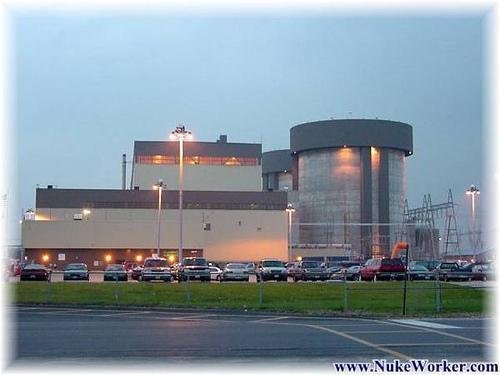
In the heart of Will County, Illinois, a titan of clean energy has been quietly powering homes and businesses for decades. The Braidwood Nuclear Generating Station isn't just a power plant; it's a cornerstone of the region's energy independence and economic stability. This comprehensive guide will offer an in-depth Braidwood Nuclear Station: Overview & History, exploring its origins, operational milestones, economic impact, and its unwavering commitment to safety and community engagement.
From its ambitious inception to its current role as a vital provider of carbon-free electricity, Braidwood's journey is a testament to the enduring power of nuclear energy. We'll peel back the layers to reveal how this facility came to be, what makes it tick, and why it remains indispensable for millions of people across northern Illinois.
Braidwood Nuclear Station: At a Glance
Before we dive deep, here are the essential facts about the Braidwood Nuclear Generating Station:
- Location: Will County, northeastern Illinois, U.S.
- Purpose: Provides electricity to Chicago and northern Illinois.
- Original Builder: Commonwealth Edison.
- Current Operator: Constellation Energy (after Exelon's Generation spin-off).
- Reactor Type: Two Westinghouse pressurized water reactors.
- Online Dates: Unit #1: July 1987; Unit #2: May 1988.
- Commercial Operation: Unit #1: July 1988; Unit #2: October 1988.
- License Extension: Extended by NRC to 2046 (Unit #1) and 2047 (Unit #2).
- Current Capacity: 2,386 net megawatts (largest nuclear plant in Illinois).
- 2023 Output: Over 20.1 million megawatt-hours of carbon-free electricity.
- Homes Served: Nearly 1.8 million homes.
- Economic Impact: 684 employees, $75 million annual payroll, $28.5 million in annual property taxes.
From Vision to Reality: The Birth of Braidwood Nuclear Station
The story of the Braidwood Nuclear Generating Station begins in an era of growing energy demand and a push for reliable, large-scale electricity generation. Conceived and initially constructed by Commonwealth Edison, a pioneering utility company, the Braidwood plant was designed to be a significant contributor to Illinois' energy grid.
Its construction represented a massive investment in the future, laying the groundwork for a facility that would eventually power millions of homes. The foresight to build such a robust infrastructure has paid dividends for decades, providing a steady and independent power source. Over the years, the ownership structure evolved, reflecting broader changes in the energy industry. After Commonwealth Edison, the station was transferred to Exelon Corporation, a major player in the nuclear energy sector. More recently, with Exelon's Generation spin-off, the Braidwood Nuclear Generating Station came under the stewardship of Constellation Energy, its current operator. This transition ensures continuity of expert management and ongoing investment in the plant's long-term performance and safety.
The Powerhouses Within: Reactors and Capacity
At the core of Braidwood's immense power generation capability are its two Westinghouse pressurized water reactors (PWRs). These advanced reactors are known for their efficiency and robust safety features, forming the backbone of the station's operations.
Unit #1 first came online in July 1987, quickly followed by Unit #2 in May 1988. These critical milestones marked the beginning of their operational lives, leading to their commercial operation in July and October of 1988, respectively. From that point forward, Braidwood began its steady contribution to the regional power supply.
Initially, the U.S. Nuclear Regulatory Commission (NRC) granted licenses for the units to operate until 2026 and 2027. However, recognizing the plant's exceptional performance and the critical need for continued carbon-free energy, the NRC approved extended licenses, pushing their operational horizon significantly further to 2046 for Unit #1 and 2047 for Unit #2. This extension underscores the plant's ongoing value and the confidence in its long-term viability.
To maximize efficiency and output, both units have undergone strategic power uprates. The first occurred in May 2001, adding a substantial 175.6 thermal megawatts (MWt) of capacity. A second, more modest uprate in February 2014 added another 58.4 MWt. These upgrades allow the plant to produce more electricity from its existing infrastructure, making it even more productive without expanding its physical footprint.
Illinois' Energy Giant: A Look at Braidwood's Output and Impact
With its powerful reactors and strategic upgrades, Braidwood Nuclear Station proudly stands as the largest nuclear plant in Illinois, a title it earned after its 2001 power uprates. It boasts a formidable net total capacity of 2,386 megawatts. To put this into perspective, its capacity is only marginally higher than the LaSalle County Nuclear Generating Station (2 MW more) and the Byron Nuclear Generating Station (4 MW more than LaSalle), highlighting the impressive scale of these Illinois powerhouses.
The impact of this massive output is profound. In 2023 alone, Braidwood generated an astounding over 20.1 million megawatt-hours of carbon-free electricity. This isn't just a number; it represents a significant stride in combating climate change, equivalent to removing 2.9 million average passenger vehicles from the roads each year. This clean energy serves nearly 1.8 million homes, providing reliable and environmentally responsible power to a substantial portion of Illinois.
Beyond the electrons it delivers, Braidwood is a powerful economic engine for the region. The plant directly employs 684 highly skilled individuals, contributing an annual payroll of $75 million to the local economy. But the ripple effect extends far wider: the station supports nearly 5,000 direct and secondary jobs across Illinois, bolstering various industries and services. Furthermore, Braidwood contributes a substantial $28.5 million in annual property taxes, funds that are crucial for local schools, emergency services, and infrastructure, benefiting every resident in the surrounding communities.
Safety First: Emergency Planning and Seismic Resilience
Operating a nuclear power plant inherently demands the highest standards of safety and preparedness. The Nuclear Regulatory Commission (NRC) meticulously defines two critical emergency planning zones around facilities like Braidwood to ensure public safety.
The first is the plume exposure pathway zone, extending in a 10-mile (16 km) radius around the plant. This zone is designed for protective actions against potential airborne radioactive contamination. The second is the ingestion pathway zone, a much larger 50-mile (80 km) radius, focused on safeguarding against contaminated food and liquid. These zones guide emergency response plans, ensuring that local authorities and residents are prepared for any unlikely event.
In 2010, the U.S. population residing within the 10-mile radius of Braidwood was recorded at 33,910, showing a 6.5% increase over the preceding decade. Expanding to the 50-mile zone, the population stood at 4,976,020, a 5.3% increase since 2000. Major cities like Joliet (20 miles away) and parts of Aurora and Naperville (42 miles away) fall within this 50-mile ingestion pathway zone, underscoring the broad reach of Braidwood's safety considerations.
Addressing natural hazards, a significant concern for any large infrastructure project is seismic activity. A 2010 NRC study meticulously estimated the annual risk of an earthquake intense enough to cause core damage at Braidwood to be remarkably low: 1 in 136,986. This assessment highlights the robust design of the plant and its ability to withstand potential seismic events, a testament to the stringent engineering and safety protocols in place.
Addressing Concerns: Environmental Stewardship and Regulatory Oversight
Like any industrial facility, nuclear plants face scrutiny regarding their environmental impact. In 2006, Exelon, the operator at the time, faced a lawsuit alleging that the Braidwood plant released radioactive tritium into local water sources, a potential violation of its permit. Such allegations naturally raise public concern.
However, subsequent investigations and statements from regulatory bodies provided crucial context. The NRC stated unequivocally that these releases did not jeopardize human health or safety. Concurrently, the Illinois EPA confirmed that tests showed tritium levels were below action levels of 20,000 picoCuries per liter, indicating no immediate danger to the public. Despite these assurances, Exelon, in a proactive move to address community concerns, agreed to provide bottled water to residents of Godley and those within 1500 feet of the blowdown line to the Kankakee River. This action, while not an admission of harm, demonstrated a commitment to community reassurance and goodwill.
Beyond specific incidents, Braidwood Clean Energy Center, now under Constellation, maintains a proactive approach to environmental stewardship. The facility is built on a sprawling 4,457-acre site, much of which is dedicated to natural habitats and conservation efforts. Strict safety standards are non-negotiable, enforced through highly skilled employees, continuous training programs, and diligent daily oversight from the NRC. This multi-layered approach ensures both operational excellence and environmental responsibility.
Beyond Power: Braidwood's Community and Environmental Commitments
Braidwood Nuclear Station's influence extends far beyond the grid. The plant and its employees are deeply integrated into the fabric of the local community, demonstrating a commitment to giving back and fostering a healthy environment.
One shining example is the "Fishing for a Cure" bass fishing tournament, hosted at Braidwood Lake since 2002. This popular annual event has raised an impressive over $836,000 for various charities, showcasing how local passion can translate into significant philanthropic impact. Constellation also plays a vital role as a top sponsor of the Lion’s Club annual Summerfest, contributing to the vibrancy and community spirit of local celebrations.
Addressing pressing social issues, the company supported the Braidwood Area Healthy Community Coalition (BAHCC) with a substantial $53,000 donation in 2017. This funding specifically targeted efforts to combat the devastating opioid crisis, highlighting the plant's commitment to the well-being and public health of its neighbors.
Environmental stewardship is another cornerstone of Braidwood's community engagement. Exelon's Gabby Green Grants program awarded $10,000 to local schools, empowering young minds to undertake environmental projects and foster a new generation of eco-conscious citizens. Furthermore, Braidwood Lake itself has become a hub for conservation. Since 2007, nearly 1,000 artificial habitats have been deployed in the lake, significantly enhancing the largemouth bass populations. These efforts are undertaken in conjunction with the Illinois Department of Natural Resources (IDNR), which regularly restocks the lake, ensuring a thriving ecosystem and continued recreational opportunities for the community.
Your Questions Answered: Understanding Braidwood's Role
You might have some lingering questions about Braidwood Nuclear Station and its place in your community. Here are some common inquiries addressed directly:
Who owns and operates the Braidwood Nuclear Station today?
Currently, the Braidwood Nuclear Generating Station is owned and operated by Constellation Energy. It was originally built by Commonwealth Edison and later transferred to Exelon Corporation before Constellation's spin-off from Exelon Generation.
How much electricity does Braidwood produce annually?
In 2023, Braidwood generated over 20.1 million megawatt-hours of carbon-free electricity. This capacity makes it the largest nuclear plant in Illinois, capable of serving nearly 1.8 million homes.
What type of reactors does Braidwood use?
Braidwood features two Westinghouse pressurized water reactors (PWRs), known for their reliability and safety.
When are Braidwood's operating licenses set to expire?
Both units at Braidwood have had their licenses extended by the NRC. Unit #1 is licensed to operate until 2046, and Unit #2 until 2047, ensuring decades of continued carbon-free power generation.
Is the Braidwood Nuclear Station safe from earthquakes?
According to an NRC study in August 2010, the estimated annual risk of an earthquake intense enough to cause core damage at Braidwood is extremely low, calculated at 1 in 136,986. The plant is designed with robust safety measures to withstand such events.
How does Braidwood contribute to the local economy?
Braidwood employs 684 people with an annual payroll of $75 million, supporting nearly 5,000 direct and secondary jobs in Illinois. It also contributes $28.5 million in annual property taxes, benefiting local services and infrastructure.
The Enduring Legacy of Braidwood: A Core Part of Illinois' Energy Future
As you've seen, the Braidwood Nuclear Generating Station is far more than just a power provider. Its extensive history, from its construction by Commonwealth Edison to its current operation by Constellation Energy, reflects a continuous evolution driven by the need for reliable, clean energy. With its two Westinghouse pressurized water reactors generating immense carbon-free electricity, Braidwood stands as a vital asset for millions of homes and businesses across northern Illinois.
Its unwavering commitment to safety, demonstrated through rigorous NRC oversight and proactive community engagement, ensures its continued trustworthy operation. Beyond the megawatts, Braidwood's deep involvement in local charities, environmental projects, and economic development solidifies its role as a responsible and valued corporate citizen. As Illinois navigates its energy future, the Braidwood Nuclear Station will undoubtedly remain a critical pillar, illuminating homes, supporting livelihoods, and leading the way towards a cleaner, more sustainable tomorrow.